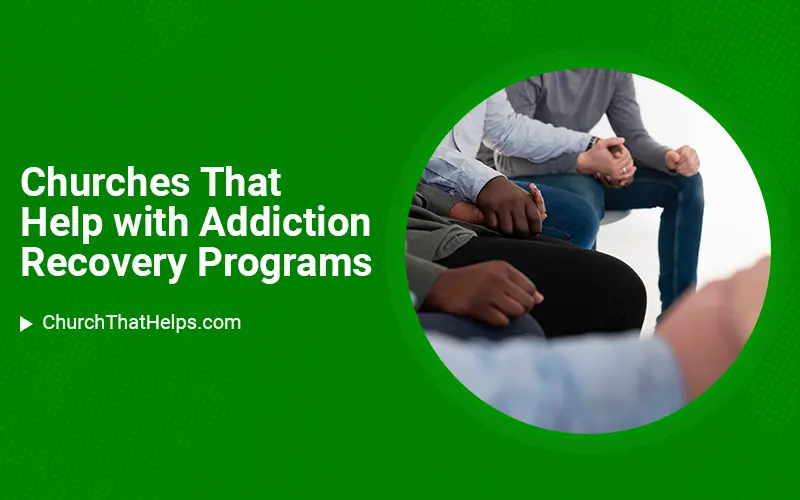
Addiction recovery is a difficult process that impacts every part of a family’s life, from financial stability to emotional well-being. To get rid of the addiction takes more than willpower. It takes support, community, and often, a faith that gives you purpose when everything feels lost.
However, finding affordable support is often the biggest hurdle for low-income families seeking a fresh start.
Fortunately, churches across the country have stepped up to offer specialized addiction recovery programs that combine clinical care with spiritual healing. These programs don’t just treat the symptoms. They address the root causes of addiction while providing a supportive community that walks with you through recovery.
If you or someone you care about is struggling with substance abuse, these seven churches that help with addiction recovery programs offer proven path to sobriety.
What Makes Church-Based Addiction Recovery Assistance Programs Different?
Church-based recovery programs stand apart because they treat addiction as both a disease and a spiritual crisis. While medical detox and therapy handle the physical aspects, spiritual guidance fills the emptiness that often drives people to substances in the first place.
Studies show faith-based programs achieve success rates between 40% and 60%, which is notably higher than secular programs. This happens because participants receive three critical elements: hope through community testimonies, support from church families, and structure through faith-based accountability.
The programs work because they don’t isolate treatment. Recovery happens within a community that accepts you, supports you, and holds you accountable.
Which Churches Offer the Addiction Recovery Programs: 7 Best Options
Many denominations manage dedicated recovery ministries that combine professional treatment with spiritual guidance. The following seven churches and faith-based organizations are renowned for their extensive networks of support.
1) The Salvation Army Adult Rehabilitation Centers
For over 100 years, The Salvation Army has offered Adult Rehabilitation Centers that provide free, no-cost residential treatment programs. These centers represent the largest provider of free residential rehabilitation in the country, helping more than 150,000 adults annually.
The six-month residential programs use a social model work-therapy approach. Participants don’t receive medication-based treatment. Instead, they learn to live without substances through work training, counseling, spiritual direction, and life skills development.
Residents work in Salvation Army thrift stores and other departments, rebuilding their sense of routine, responsibility, and self-worth. This work therapy teaches practical skills they’ll need for future employment while keeping them engaged in productive activity.
The programs are funded entirely by community donations of used furniture, clothing, and household items sold in thrift stores. This means anyone can access treatment regardless of their economic status, race, or background.
Harbor Light Centers, operated by The Salvation Army in various locations, offer both inpatient and outpatient substance abuse treatment. These programs include intensive rehabilitation units for those who’ve completed detox, as well as intensive outpatient programs for long-term care.
Check out more information here.
2) Celebrate Recovery Program at Saddleback Church
Celebrate Recovery is a Christ-centered, 12-step recovery program that originated at Saddleback Church.
Started in 1991 at Saddleback Church in California, Celebrate Recovery has grown into the largest church-based recovery movement worldwide. More than 35,000 churches now host Celebrate Recovery meetings, and over 5 million people have completed the program.
The program uses a Christ-centered 12-step approach based on biblical principles. Meetings start with worship, then participants break into gender-specific and issue-specific groups where real healing happens through shared experiences.
What sets Celebrate Recovery apart is its scope. The program helps people struggling with alcohol, drugs, pornography, gambling, food addiction, and codependency. It’s free, open to anyone regardless of faith background, and available in churches, prisons, universities, and recovery houses across multiple countries.
Over 27,000 people have graduated from the program at Saddleback Church alone. Many have gone on to serve as mentors, proving that recovery isn’t just possible, it’s sustainable.
You can find more information about this program here.
3) The Church of Jesus Christ of Latter-day Saints Addiction Recovery Program
The LDS Church operates one of the most structured faith-based recovery programs available. Recently renamed “Healing through the Savior: The Addiction Recovery Program,” it emphasizes that healing comes through Jesus Christ and His Atonement.
The program uses a 12-step workbook adapted from Alcoholics Anonymous but focused specifically on LDS teachings. Meetings are held for both those struggling with addiction and their family members, recognizing that addiction affects everyone in the home.
With thousands of groups in 30 countries, the program is free and open to non-members.
Facilitators aren’t professional counselors but trained peer mentors who have completed recovery themselves. This peer-to-peer approach creates trust and shows participants that recovery is achievable.
Faith-based programs like Renaissance Ranch also incorporate the LDS Addiction Recovery Program into their residential treatment, combining it with evidence-based therapies like CBT, DBT, and EMDR. This blend of clinical care and spiritual support gives clients comprehensive tools for lasting sobriety.
Find locations and meeting details on their website.
4) Isaiah House Treatment Center in Kentucky
Isaiah House stands as Kentucky’s largest Christ-centered nonprofit addiction recovery organization. Founded in 1999 as a small ministry helping homeless men transitioning from incarceration, it has grown into a comprehensive treatment provider with seven residential centers, three outpatient clinics, and numerous sober living homes statewide.
The program takes a holistic approach, addressing spiritual, physical, mental, financial, legal, and educational needs. Clients receive evidence-based clinical care including individual and group therapy, trauma-informed counseling, and behavioral health treatment.
What makes Isaiah House unique is its four-phase program spanning several months. Clients start with foundation-building through medical services and life skills training. Then they move into restoration, where they heal relationships and prepare for employment. This long-term approach gives people time to truly change, not just detox.
Church partnerships are central to Isaiah House’s mission. Local pastors conduct baptisms and church services, and over 1000+ salvations and 700+ baptisms have occurred through their programs this year alone. These spiritual milestones mark real transformation in participants’ lives. Check out this PDF to get more details about this program.
5) Catholic Extension’s iTHIRST Initiative
The Catholic Church has responded to the addiction crisis through Catholic Extension’s iTHIRST Initiative, which trains clergy, religious leaders, and laypeople to become certified spiritual companions for those battling addiction.
The program provides 48 hours of academically certified training through Seton Hall University. Participants learn the spiritual dimensions of addiction, pastoral care strategies, and motivational interviewing techniques.
After completing the training, they receive certification and return to their parishes equipped to establish recovery ministries.
This approach empowers local churches to become healing centers for their communities. The training has reached multiple dioceses across the United States, bringing faith-based recovery resources to rural communities that often lack access to professional treatment.
Catholic in Recovery, another Catholic program, combines the 12-step approach with the sacraments and traditions of the Church.
Meetings help Catholics work through addiction while integrating confession, communion, and other sacraments into their recovery journey.
The programs recognize that for many Catholics, true healing requires acknowledging sin and receiving the mercy offered through the Church. This sacramental approach provides a framework familiar to participants while giving them concrete spiritual practices for daily recovery.
6) United Methodist Church
The United Methodist Church (UMC) offers specialized recovery ministries that focus on creating shame-free environments for healing.
UMC congregations frequently host recovery groups and offer pastoral care for individuals and families affected by addiction. Their approach emphasizes social justice and community support, recognizing that addiction is a disease that requires compassion rather than judgment.
Many local UMC churches partner with other organizations to provide venues for support group meetings.
In addition to direct recovery support, UMC ministries often assist with the collateral damage of addiction.
For example, they may provide resources for prisoner support if an individual has faced legal trouble due to their substance use. They also focus on senior support, ensuring that elderly community members dealing with addiction or the addiction of a loved one are not left behind.
7) Episcopal Recovery Ministries
Episcopal Recovery Ministries focuses on spiritual guidance and education to help communities understand and support those in recovery.
The Episcopal Church has a long history of supporting the 12-step model. Their recovery ministries often organize “Recovery Sundays” and special services that welcome those in recovery to participate fully in church life.
The goal is to reduce the stigma associated with addiction and to provide a spiritual home for those who may feel marginalized.
This denomination is also active in social advocacy and general wellness support. They understand that recovery involves the whole person, including their legal and social standing.
For those who have been incarcerated, the church may offer bail bond assistance or guidance on navigating the legal system. This comprehensive view of recovery helps individuals reintegrate into society with a supportive network behind them.
Conclusion
Recovering from addiction is a major life change, but you do not have to do it alone. These churches understand that and have built programs where you’ll be surrounded by people who believe in your ability to change.
The path won’t be easy. But thousands have walked it before you and found freedom on the other side. They discovered that addiction doesn’t have to define their story.
With faith, community, and the right support, lasting recovery is possible.
If you’re ready to start, reach out to nearby church that helps with addiction recovery programs.